
While financial benefits of a 1031 Exchange are experienced within the 180-day exchange period, there are additional, compounding benefits that are not readily visible at the completion of your exchange.
Let’s take a look at the long-term benefits of utilizing a 1031 Exchange for your qualifying real estate transaction.
Suzy Investor owns a retail center she has been renting out over the past 20 years. She has taken annual depreciation deductions of $10,256 since 1990, reducing her tax basis to $244,880. She decides to sell the retail center at market value of $1,250,000, and rid herself of management responsibility by reinvesting into a passive investment opportunity, such as a DST.
Without leveraging a 1031 Exchange, Suzy will incur the following tax liability, leaving her only $942,400 to reinvest.
federal capital gains tax (20%): $153,000
depreciation recapture tax (25%): $51,280
state capital gains (5% varies by state): $38,250
net investment income tax (3.8%): $29,070
Total Tax Liability: $271,600
Reinvestment Total Without a 1031 exchange: $942,400 ($1,250,000 – $271,600)
However, should Suzy engage a Qualified Intermediary prior to the sale of her retail center and structure her transaction as a 1031 Exchange, she will defer all levels of tax above and have the total $1.25 Million to reinvest.
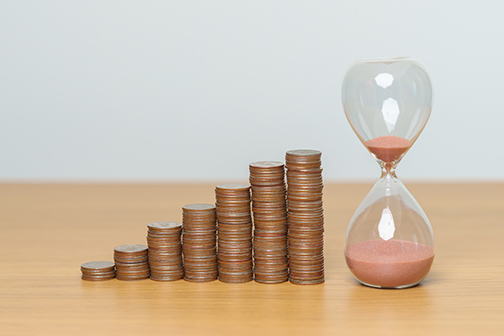
The immediate benefit is obvious; Suzy has an additional $271,600 to reinvest. The less obvious benefit is how that additional amount compounds over the proceeding years. With Suzy utilizing a 1031 Exchange and reinvesting the full $1.25 million, at a 7% compounded rate of return over the next 10 years she will have earned nearly double the investment for a total of $2.45 Million.
Without a 1031 Exchange, the reinvestment amount of just $942,400 after 10 years at the same compounding rate of return, only earns $1.85 Million, roughly only $500,000 more than her original reinvestment amount with the use of a 1031 Exchange. That equates to $600,000 less over 10 years should a 1031 Exchange not be utilized.
Utilizing a 1031 Exchange not only provides investors with immediate benefits, it continues to produce returns on investment in the future.